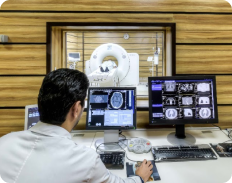
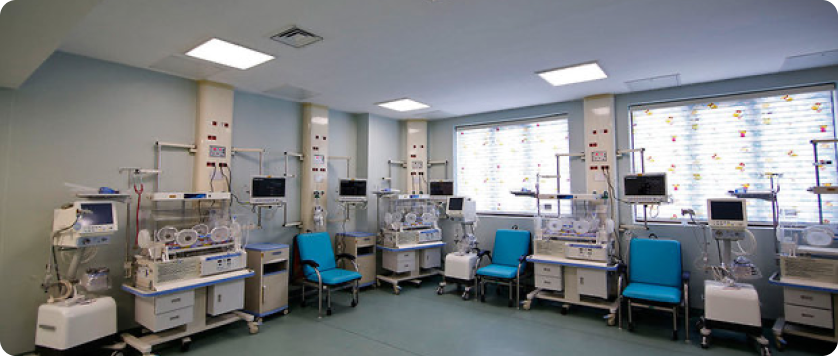
The inpatient department of the hospital is a place where patients receive round-the-clock care and treatment.
These sections are of different types, including:
- General sections: Multi-bed rooms used for patients with similar conditions.
- Private sections: single bed rooms with more amenities.
- Intensive care units: for patients who need intensive and continuous medical care.
- In all inpatient departments, doctors and nurses regularly check the patient’s condition and provide the necessary medicines and treatments.
- Also, other services such as physiotherapy, occupational therapy and speech therapy may also be provided in these departments.
- The purpose of hospitalization is to improve the patient’s condition and return to normal life.
intensive care
An intensive care unit (ICU) is a unit in a hospital where critically ill patients who require continuous intensive care and treatment are served.
These patients are usually in critical condition due to acute diseases, severe injuries, or organ failure and require continuous monitoring of vital signs and organ function support.
Personnel of the intensive care unit:
- Medical Specialists: Doctors trained in emergency medicine, anesthesia, cardiology, pulmonary, and other related specialties.
- Nurses: Nurses who specialize in caring for critical patients and can perform the necessary measures to save the patient’s life.
- Respiratory Specialists: Professionals who specialize in mechanical ventilation and care of respiratory patients.
- Nutritionists: Specialists who specialize in nutrition for critically ill patients.
- Physiotherapists: Specialists who help patients maintain their muscle strength and mobility.
- Psychological experts: experts who help patients and their families cope with the stress and anxiety caused by being admitted to the ICU.
Equipment of the intensive care unit:
- Vital Sign Monitors: For continuous monitoring of patient’s heart rate, blood pressure, respiration, blood oxygen level and other vital signs.
- Mechanical ventilators: To provide artificial respiration to patients who are unable to breathe effectively on their own.
- Infusion pumps: to inject drugs and fluids to the patient.
- Dialysis machines: to purify the blood of patients with kidney failure.
- Imaging devices: such as X-rays and CT scans to check the patient’s condition.
Visiting the patient in the ICU:
Visiting patients in the ICU is more limited than other departments of the hospital due to the special conditions of this department.
Usually, only close family members can visit the patient with the doctor’s permission and for a limited time.
Care after discharge from ICU:
Patients discharged from the ICU require continuous care and follow-up at home.
The patient’s physician provides the necessary instructions regarding medications, diet, activity, and necessary care to the patient and his family.
Cost of hospitalization in ICU:
The cost of hospitalization in ICU depends on the severity of the patient’s illness, the duration of hospitalization, the type of treatments performed and the patient’s place of residence.
In Iran, the cost of hospitalization in ICU is covered by insurance companies up to a certain limit.
Patients can refer to the desired hospital or treatment center to know the exact cost of hospitalization in ICU.
The special care services of the hospital include the following departments:
- ICU
- CCU
- ICU-OH
Contract party insurances